
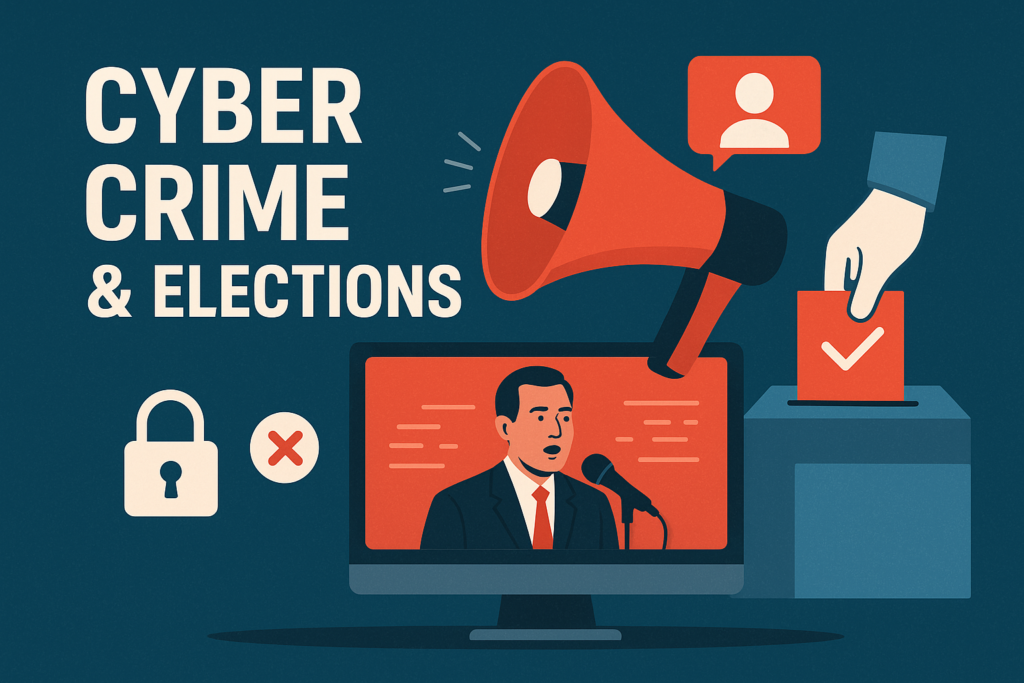
Elections are the backbone of any democracy. However, with increasing digitalization, cyber crime has emerged as a serious threat to free, fair, and transparent elections worldwide. From AI-generated fake speeches to large-scale voter data breaches and misinformation campaigns, cyber criminals and hostile actors are exploiting technology to influence public opinion and election outcomes.
In this blog, we explore how cyber crime and elections are interconnected, the role of Artificial Intelligence (AI), and the urgent need for legal, technical, and social safeguards.
1. Cyber Crime & Elections: A Growing Global Concern
Modern elections rely heavily on:
- Digital voter databases
- Electronic communication and campaigning
- Social media platforms
- Online fundraising and advertising
This dependence has made electoral systems vulnerable to cyber attacks, manipulation, and digital interference.
Cyber crime during elections is no longer limited to hacking voting machines; it now includes psychological manipulation, data misuse, and AI-driven disinformation.
2. AI Fake Speeches: The Rise of Deepfake Politics
What Are AI Fake Speeches?
AI fake speeches are deepfake audio or video recordings created using Artificial Intelligence that make it appear as if a political leader or candidate said something they never did.
How AI Fake Speeches Impact Elections
- Fake speeches announcing withdrawal from elections
- Manipulated videos inciting violence or hatred
- False confessions or policy statements
- Damage to candidate reputation within hours
These videos spread rapidly on WhatsApp, YouTube, Instagram, X (Twitter), and Facebook, often before fact-checkers can respond.
Legal Challenges
- Difficulty proving authenticity
- Lack of clear deepfake-specific laws in many countries
- Jurisdictional issues in cross-border cyber crimes
3. Social Media Manipulation During Elections
How Social Media Is Weaponized
Social media platforms have become powerful tools for electoral manipulation, including:
- Fake accounts and bot armies
- Coordinated hashtag campaigns
- Paid political misinformation ads
- Algorithm manipulation to amplify polarizing content
Bot Networks and Troll Farms
Automated bots and organized troll groups:
- Spread false narratives
- Harass journalists and opposition voices
- Artificially trend political hashtags
- Influence undecided voters
This form of cyber crime undermines informed voter decision-making.
4. Voter Data Breaches: A Silent but Dangerous Threat
What Is Voter Data?
Voter data includes:
- Names, addresses, age
- Phone numbers and email IDs
- Aadhaar or national ID-linked information (in some countries)
- Voting preferences and demographic profiling
How Data Breaches Occur
- Hacking of election commission databases
- Insider threats
- Third-party vendor vulnerabilities
- Poor cybersecurity infrastructure
Consequences of Voter Data Breaches
- Targeted political manipulation
- Identity theft and financial fraud
- Loss of public trust in elections
- Violation of data protection laws
5. Misinformation Campaigns & Psychological Warfare
What Is Election Misinformation?
Misinformation campaigns involve spreading false or misleading information to manipulate voter perception.
Common Forms of Election Misinformation
- Fake news articles
- Edited videos and images
- False polling data
- Rumors about voting dates or procedures
Psychological Impact on Voters
- Confusion and fear
- Voter suppression
- Polarization of society
- Erosion of democratic values
Misinformation is often emotion-driven, making it more viral than factual content.
6. Role of Cyber Crime Laws and Election Regulations
Existing Legal Frameworks
- Information Technology laws
- Election codes of conduct
- Data protection regulations
- Criminal laws on cheating, forgery, and impersonation
Gaps in the Legal System
- Slow legal response to digital crimes
- Lack of AI-specific election laws
- Limited technical expertise in investigations
There is an urgent need for stronger cyber election laws and faster digital evidence handling.
7. How Governments, Platforms, and Citizens Can Respond
Government Actions
- Cybersecurity audits of election systems
- AI and deepfake detection tools
- International cooperation
Role of Social Media Platforms
- Labeling AI-generated content
- Removing coordinated misinformation
- Transparency in political ads
Citizen Responsibility
- Verify before sharing
- Rely on official sources
- Report fake content
- Improve digital literacy
8. Future of Elections in the Age of AI
As AI technology advances, cyber crime tactics will become more sophisticated. The future of elections depends on:
- Ethical AI usage
- Strong cybersecurity infrastructure
- Updated cyber laws
- Public awareness and education
Protecting elections is not just a technical challenge—it is a constitutional and moral responsibility.
Conclusion
Cyber crime has transformed elections into a new digital battlefield. AI fake speeches, social media manipulation, voter data breaches, and misinformation campaigns pose serious threats to democracy across the world.
Only through strong laws, respons